
In July 2026, researchers, public collaborators and facilitators came together in Exeter for our fourth Patient and Public Involvement and Engagement (PPIE) Summer School.
Over three days, participants explored what values-led public involvement can look like in health and care research, sharing experiences, challenging assumptions and reflecting on how to work more inclusively with people with lived experience.
The Summer School offered a space to step back from the day-to-day demands of research and consider the values, relationships and approaches that help make public involvement what it is.
Why take time to reflect on PPIE?
Public involvement is an important part of making research relevant to the people and communities it aims to support. But values-led involvement takes more than simply creating opportunities for people to contribute. It requires researchers to think carefully about whose voices are heard, how different experiences are valued and how partnerships can be built on trust and mutual respect.
The Summer School provided an opportunity to explore these questions together, encouraging participants to look beyond the practicalities of involving people and reflect on the principles that underpin good practice.
Through discussion, practical activities and shared learning, participants were encouraged to consider how their own experiences and approaches shape the way they work with public collaborators.
Learning together, with lived experience at the heart
A central part of the Summer School was the opportunity to learn alongside public collaborators, whose experiences and perspectives brought important insights to discussions.
Hearing directly from people with lived experience helped participants consider the value of different forms of knowledge and the importance of creating opportunities for genuine collaboration.
One attendee reflected on the impact of these contributions:
“I particularly enjoyed hearing from the public collaborators, they spoke with such passion.”
The programme also created opportunities to explore how researchers can work more inclusively with people and communities whose voices are less often heard in research.
The Working Together with Seldom Heard Groups workshops encouraged participants to think differently about inclusive engagement, providing space for discussion, reflection and the sharing of perspectives.
As one attendee explained:
“The working together with seldom heard groups workshops were thought-provoking and insightful. The session was facilitated brilliantly by the team, who created an engaging and supportive environment for discussion and reflection. It encouraged me to think differently about inclusive engagement and provided valuable perspectives that I can apply”
Day 1: Introductions, safe spaces and justice
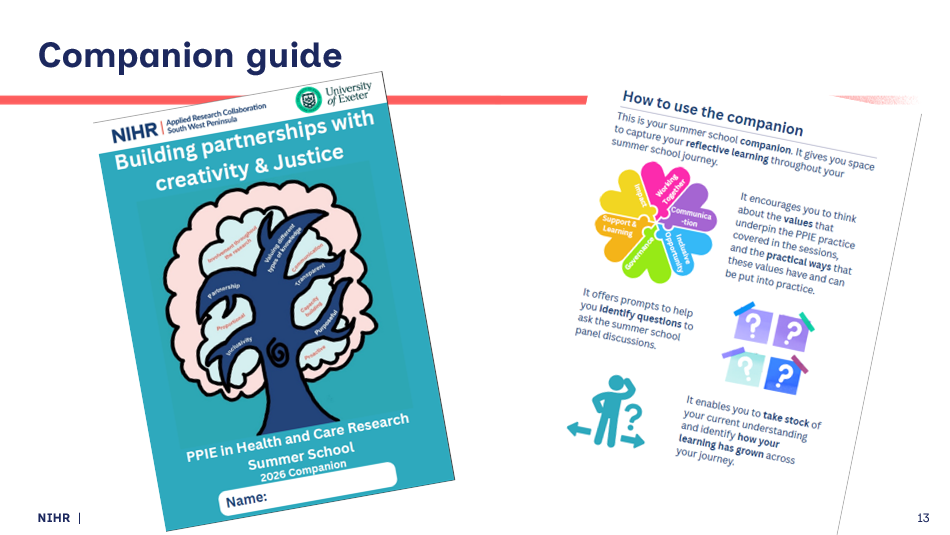
Day one opened the fourth PPIE Summer School in Exeter, led by Kristin Liabo, Angela King and Beccy Summers. The day began with introductions and an overview of the course, alongside the introduction of a new companion guide designed to support delegates throughout the Summer School, with practical hints, tips and resources to help them along the way.
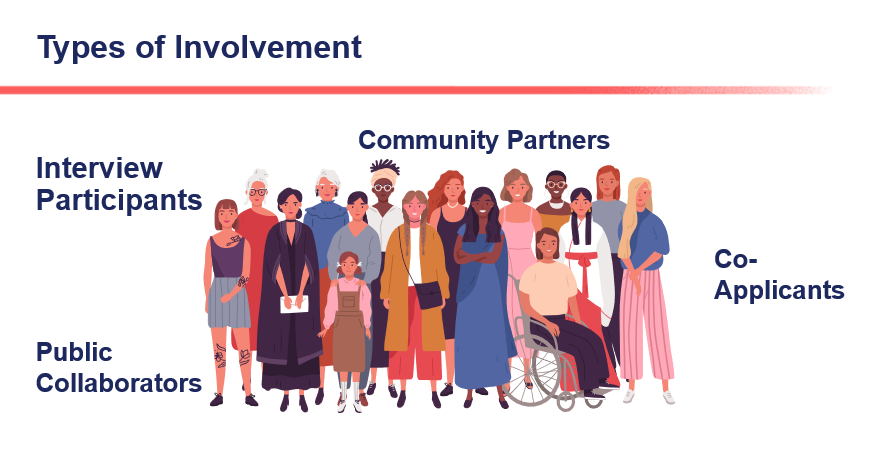
The first session explored the role of public members, with a focus on what effective and ‘non-traditional’ involvement in research can look like. Public contributors Angela and Leon shared their experiences of working across different types of research, from contributing to a big data study to leading on PPI within wider research projects. The session challenged assumptions about what activities public contributors can take part in, highlighting the value of recognising people’s skills, experience and expertise beyond traditional academic roles.
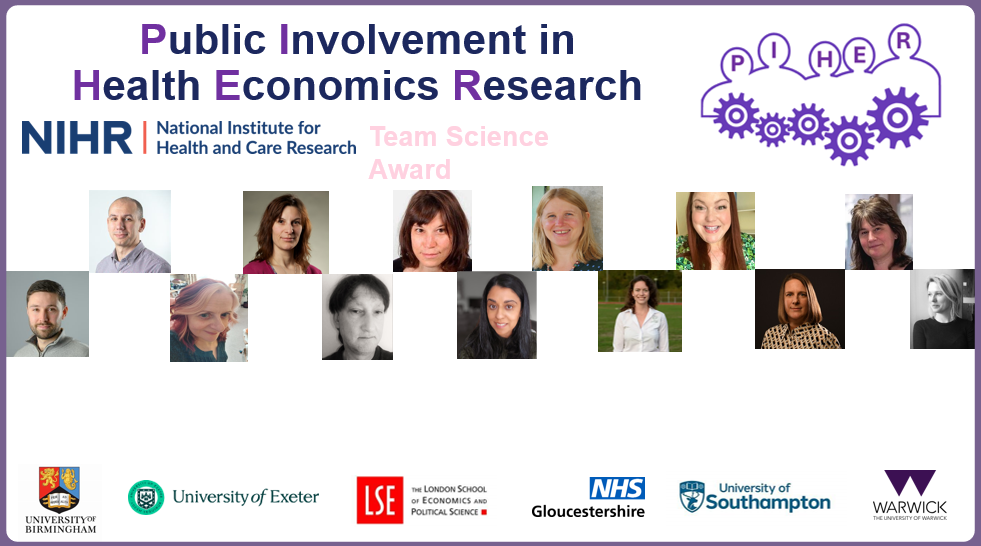
Phil Ruthen and Annie Hawton then introduced PPIE in Health and Care Economics (HCE), exploring the key principles of HCE and its role in making health and care services affordable, offering value for money, and accessible and fair. Delegates considered how PPIE can help move HCE research beyond purely technical analysis, bringing a more people-centred understanding of value, priorities and impact.
The afternoon included a session from Leon Farmer, who reflected on his experience as a PPI contributor on the SAMueL project. Leon shared his journey from advisory group member, to co-applicant, and eventually into a leadership role, alongside reflections on the challenges he has faced and the support that has helped him develop as a public contributor.
Some of Leon’s highlights included:
- Building a cohesive and engaged group where people feel valued
- Being part of a team doing important and impactful work
- Developing greater self-confidence and feeling proud of what he has achieved
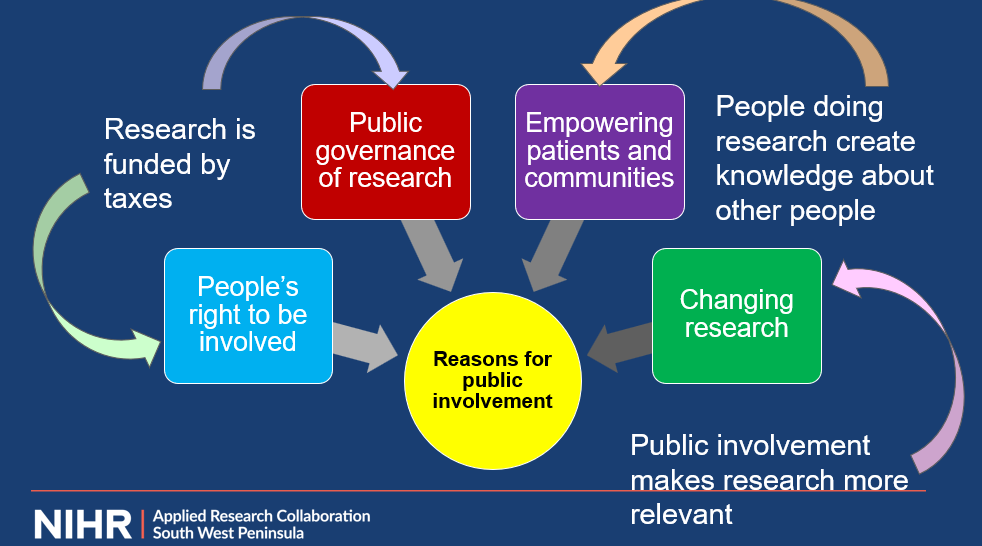
Leon’s talk was followed by a session on justice and PPI, exploring the characteristics of knowledge injustice, how this can relate to PPI in research, and why it is important to consider these issues when planning involvement.
Delegates reflected on what justice means in practice, including creating opportunities for people to be heard without being pre-judged. The session highlighted the importance of enabling everyone to contribute, listening without prejudice, and creating the conditions for meaningful conversations, learning and collaboration.
Day 2: Participation, challenges and impact
Day two explored some of the practical and less visible aspects of values-led public involvement, including participation payments, the challenges public collaborators can experience, and how we think about the impact and quality of involvement.
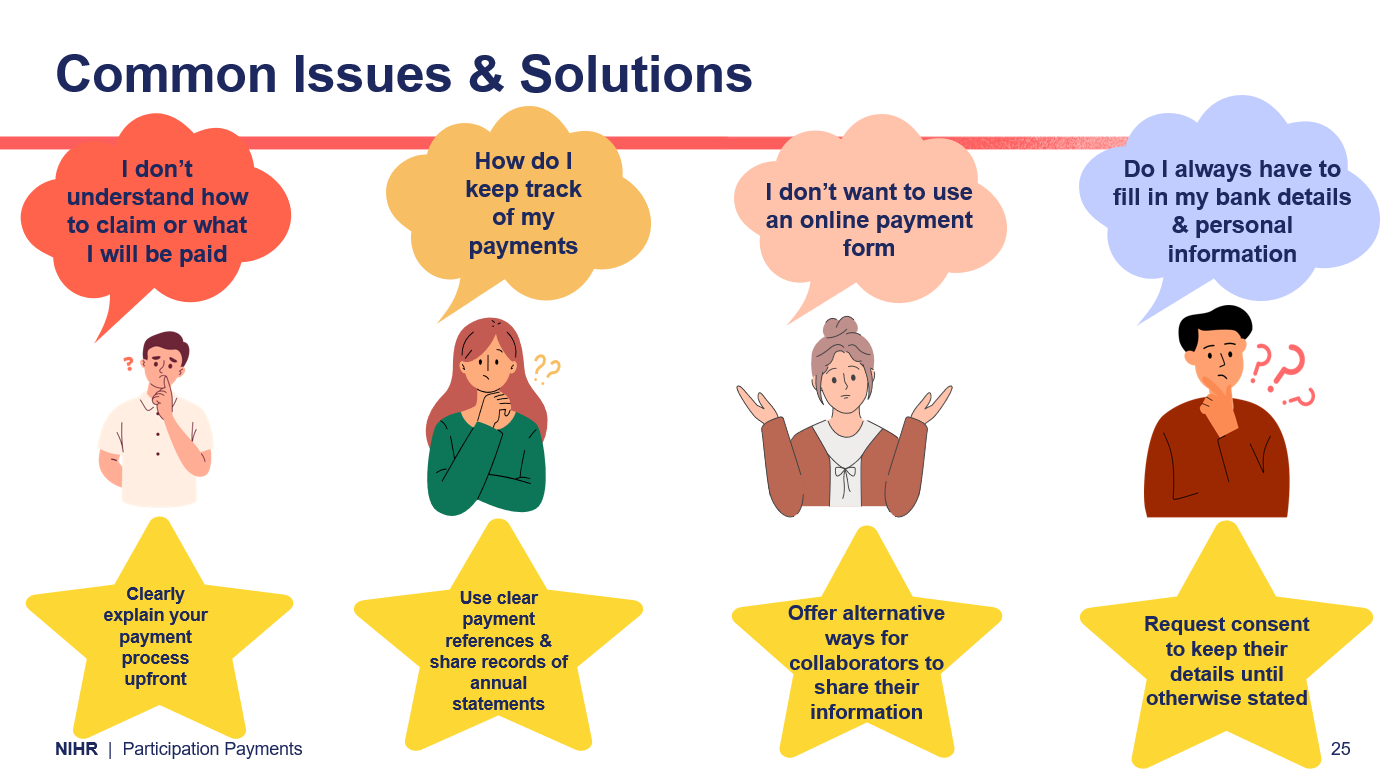
The day began by looking at participation payments, exploring the different ways people may be involved in research and why getting payment and expenses right matters. The session highlighted the importance of having a clear payment process, being flexible to people’s circumstances, separating expenses from thank-you payments and making sure public collaborators understand how payments may affect tax or benefits.
Participants then considered some of the challenges that can arise when people are involved in research. Rather than suggesting that PPIE should be free from challenge, the session encouraged participants to recognise that challenges can be a natural part of working together. These might include uncertainty around roles, communication and jargon, power dynamics, feeling undervalued, workload, accessibility and a lack of feedback.
Particular attention was given to emotional burden, including the possibility that involvement can be personally demanding or bring up difficult memories and experiences. The session emphasised the importance of recognising these challenges and creating approaches that can support people through them.
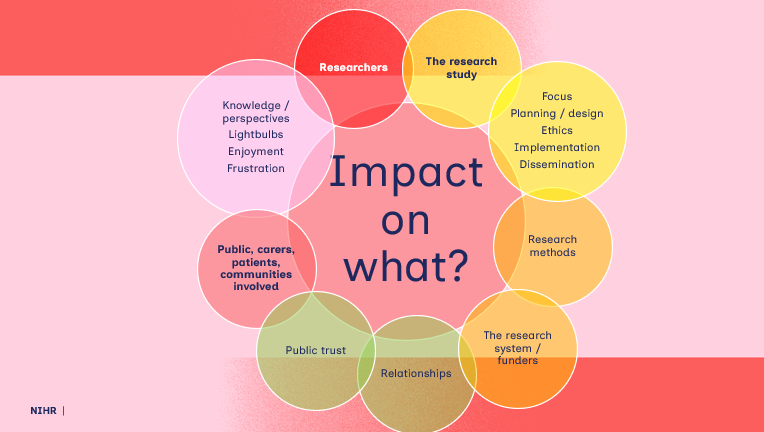
The afternoon moved on to consider how we evaluate public involvement, looking beyond simply asking whether PPIE has had an impact on a research study. Participants explored the different places impact can occur, including on researchers, research design and methods, public collaborators and communities, relationships, and the wider research system.
Through examples and group discussion, participants were encouraged to think about the relationship between the quality of involvement and its potential impact, and to consider what good involvement looks like in practice.
Day 3: Challenges, reflection and collaboration
The final day brought together many of the themes explored throughout the Summer School, with a focus on the experiences of public collaborators, the challenges that can arise through involvement, and how we can better understand the quality and impact of PPIE.
Participants explored what can happen when public collaborators have a negative experience of involvement, considering challenges that can occur before, during and throughout someone’s involvement in research. The session drew on literature exploring public collaborators’ experiences and highlighted themes including tokenism, power dynamics, communication, lack of feedback, confusion about roles, accessibility and emotional burden.
A key message was that these challenges rarely exist in isolation. For example, a lack of feedback can contribute to confusion about someone’s role, feelings of being undervalued, emotional burden and wider concerns about power and inclusion. At the same time, small changes, such as providing meaningful and timely feedback, can help create a more positive experience.
The programme then moved into a wider discussion about impact and quality, encouraging participants to think about what we mean when we say that PPIE has made a difference. Rather than viewing impact solely as a change to a research study, the session explored the many different places involvement can have an effect, including relationships, researchers’ knowledge and perspectives, public collaborators and communities, research methods and the wider research system.
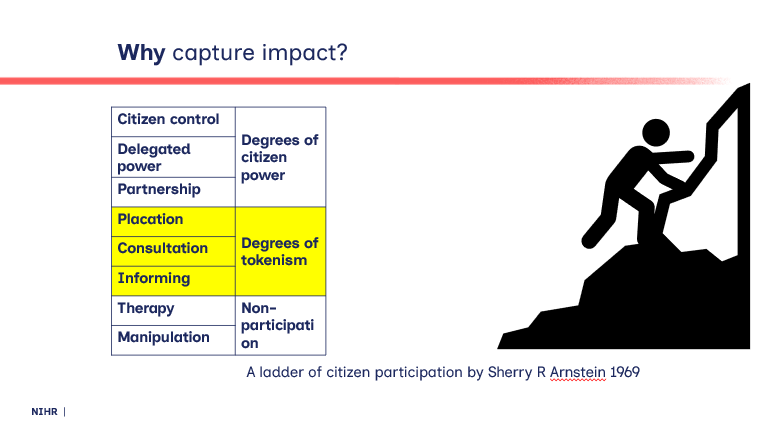
Using examples from practice, participants considered how different levels of involvement can lead to different experiences and outcomes. The discussion encouraged participants to think about what they can do to create better conditions for collaboration, rather than focusing only on measuring impact after the event.
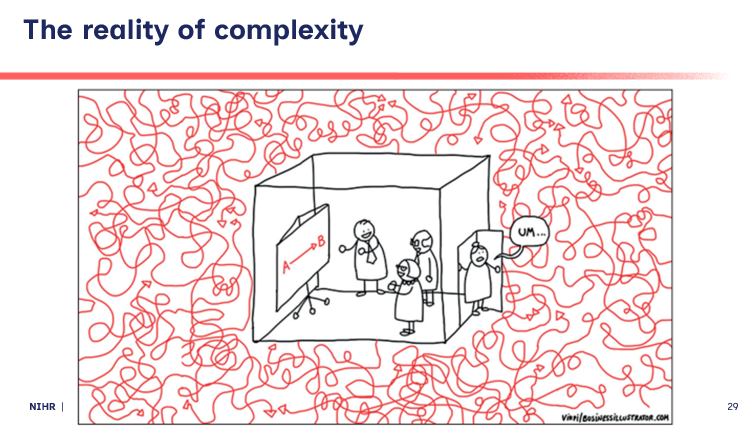
The day finished by looking at the complexity of changing systems and research collaboration, with participants working together to consider how they might evaluate PPIE within their own organisations and what information could help them understand how they are doing.

Ali Bingham, Research Associate and Physiotherapist at the University of Exeter, attended the Summer School and produced this poster to demonstrate what she took away from the event.
Making space for creativity and reflection
Alongside discussion and practical exploration, creativity was woven throughout the Summer School, offering different ways to engage with ideas and encouraging participants to approach familiar topics from new perspectives.
These creative elements helped make the learning experience engaging and supported an environment where participants could feel comfortable sharing their thoughts and experiences.
One attendee highlighted how these approaches contributed to the experience:
“It was also really fun having creative aspects embedded throughout, which I thought worked really well to get certain points across, but also make an engaging and comfortable space.”
The emphasis on reflection was another important part of the programme. Participants were given time to consider their own practice, explore the challenges of public involvement and think about how their learning could inform their future work.
Rather than focusing solely on practical skills, the Summer School encouraged participants to question assumptions, share ideas and consider what meaningful involvement could look like in their own research and organisational contexts.
What participants took away
The feedback from attendees highlighted the value of having dedicated time to explore PPIE in an open, supportive and collaborative environment.
For some, the experience offered new perspectives and ideas. For others, it provided an opportunity to reflect on their existing practice and consider how they could approach public involvement differently.
One attendee summed up the experience:
“Fantastic! It has really helped to change my way of thinking about PPIE, offering opportunities to express my own thoughts and ideas about involving people with lived experience in research and giving crucial time for reflection on such a key aspect of the research process. Would 100% recommend”
The feedback reflects the importance of creating opportunities for researchers and public collaborators to learn together, share experiences and explore the values that underpin values-led involvement.
Looking ahead
The 2026 PPIE Summer School offered an opportunity to pause, reflect and explore how public involvement can be embedded more thoughtfully in health and care research.
By bringing together people with different experiences and perspectives, the programme encouraged participants to think about inclusion, creativity and collaboration in new ways, and to consider how these principles could shape their future practice.
Values-led PPIE is an ongoing process of listening, learning and building relationships. Creating spaces where researchers and public collaborators can reflect together is one way to support that process and help ensure research is shaped by the people it aims to benefit.
In this video, delegates share their reflections on the experience, what they took away from the Summer School and what public involvement in research means to them.
Thank you to everyone who contributed to making this year’s Summer School such a valuable and collaborative experience.


Interested in getting involved in PPIE?
Find out more about public involvement and engagement at ARC South West and discover opportunities to help shape research.
Get Involved