
The annual conference explored how research evidence can inform decisions and improve health and care. Through keynote presentations and practical workshops, delegates looked at how to ask focused questions, find relevant evidence and assess its quality.
The event also showcased the ongoing work of ARC South West’s Making Sense of Evidence programme, which has supported people across the region to develop their understanding of health research evidence for more than 15 years.
Supporting people to understand and use research evidence
The day began with an introduction to NIHR ARC South West and its Making Sense of Evidence programme, highlighting the importance of helping people develop the knowledge and confidence to understand and use research evidence.
Since its introduction in 2010, the programme has delivered hundreds of workshops across the region, reaching more than 400 delegates each year since 2022. Its audiences have included GPs, nurses, allied health professionals, consultants, public health advisers, patient representatives and members of the public, as well as people working in organisations such as local authorities, schools and emergency services.
The programme has developed to offer a range of training opportunities, from introductory sessions for those new to health research through to more tailored workshops for people with existing research experience. Alongside its in-person and online training, it provides resources to support journal clubs and has developed a network of tutors to help deliver and develop the programme.
The introduction highlighted the importance of making research evidence accessible to a wide range of people, enabling them to ask questions, understand research findings and make more informed decisions in their own areas of practice.
Creating evidence, changing practice: lessons from a career
The morning’s keynote was delivered by Professor Nick Barber, Emeritus Professor of Pharmacy at UCL School of Pharmacy, who reflected on his career and how research can influence professional practice, health services and national policy.
Drawing on several decades of work in pharmacy, Professor Barber explored the importance of identifying problems in everyday practice, listening to people’s experiences and using research evidence to challenge established approaches.
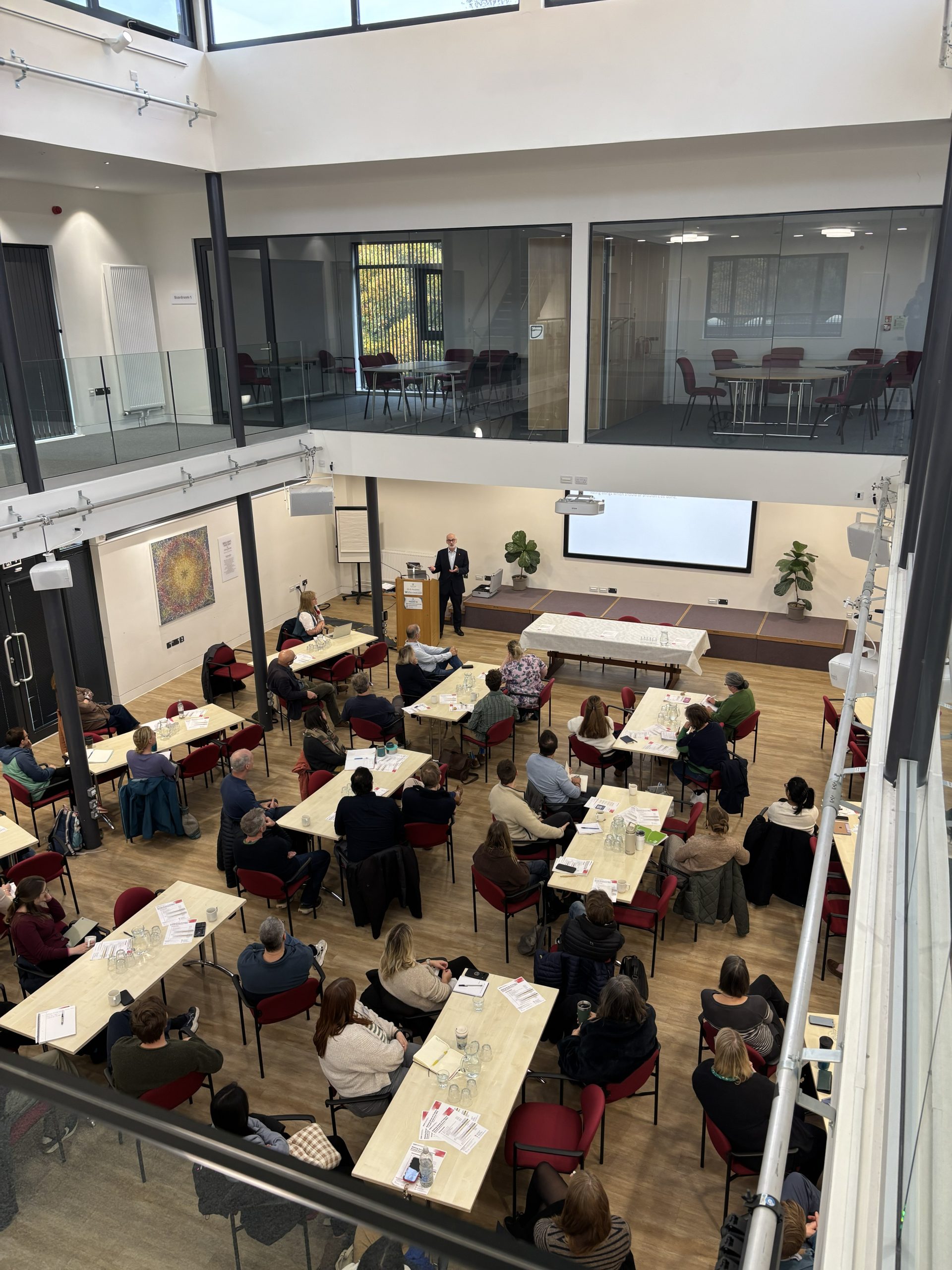 He shared examples from his work, including research into patients’ experiences of taking new medicines. Findings revealed that many patients experienced problems and concerns shortly after starting treatment, prompting further research into how pharmacist support could help. This work contributed to the development of the NHS New Medicine Service, demonstrating how listening to patients and building robust evidence can lead to changes in services and improvements in care.
Professor Barber also reflected on his work around medication errors, prescribing and patient safety, highlighting how research can help identify problems, understand their causes and inform safer systems. Much of his work is captured in his new book for the public: “How to take drugs, a new approach to medication for better results and fewer side-effects”.
Throughout the presentation, he emphasised several important lessons for researchers and those looking to influence practice: the value of lived experience, the importance of collaboration, the need to challenge established thinking and the role of robust research methods in building a convincing case for change.
His overarching message was to focus on doing the right thing and finding the right way to do it. He encouraged delegates to look beyond their immediate networks, engage with different perspectives and consider how their research could make a meaningful difference.
Structuring a clinical question
Following the keynote, delegates explored how to turn a clinical uncertainty into a focused question that can be investigated using research evidence.
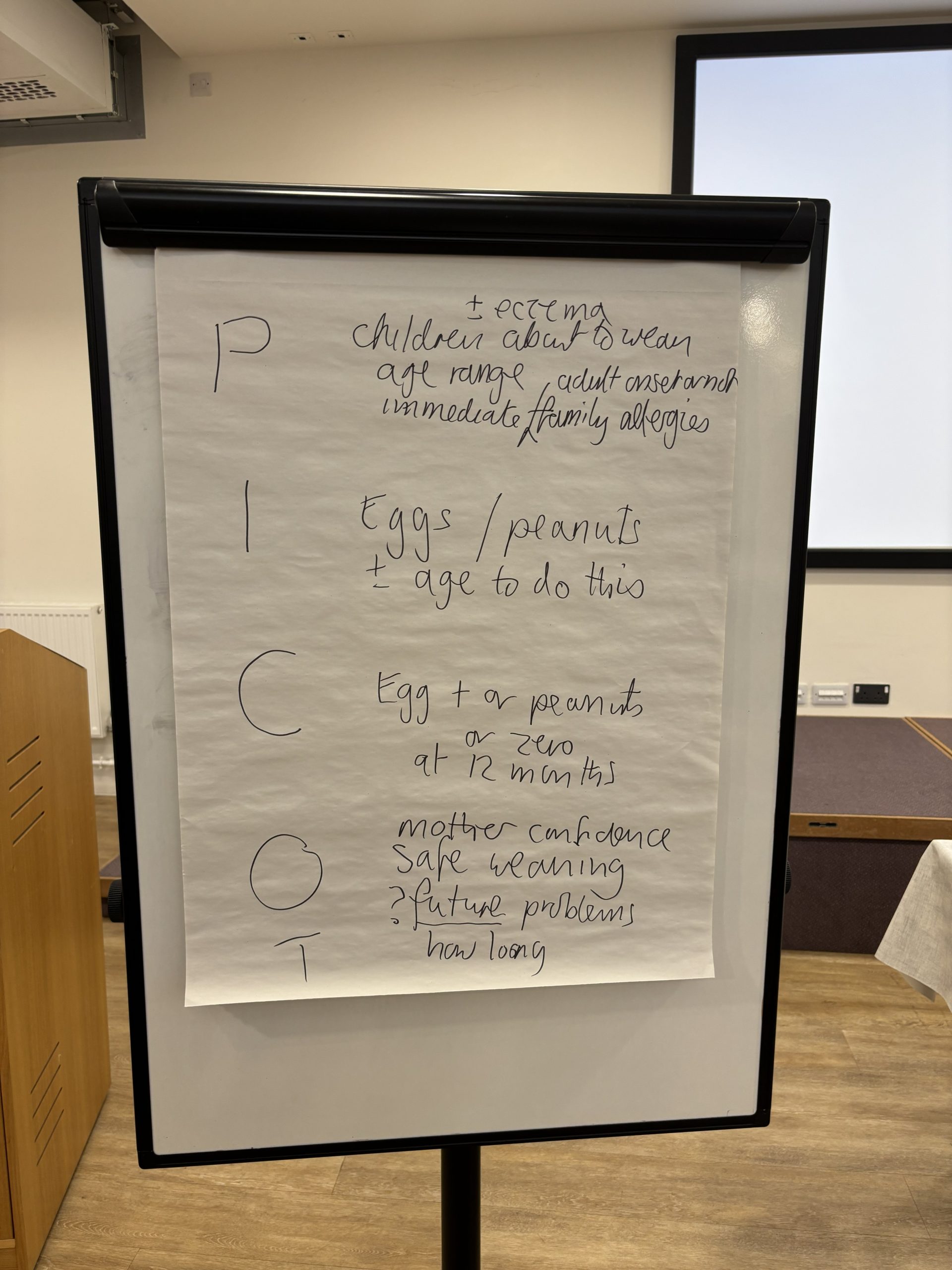
The session introduced the PICO framework, a widely used approach to structuring clinical questions by identifying four key components:
- Population: Who is the question about?
- Intervention: What treatment, approach or intervention is being considered?
- Comparison: What is it being compared with, where relevant?
- Outcome: What are you hoping to understand or achieve?
Using this structure helps make questions more specific and manageable, providing a clearer starting point for searching for relevant evidence and assessing whether research findings are applicable to a particular situation.
Delegates were given a clinical scenario involving a mother seeking advice about introducing peanuts and eggs into her five-and-a-half-month-old baby’s diet. With conflicting advice from family members, a family history of allergies and the child already experiencing mild eczema, the scenario demonstrated how a seemingly straightforward clinical question can involve several different considerations.
By breaking the scenario down into its population, intervention, comparison and outcome, delegates could consider how to formulate a focused question that would help guide an evidence search.
Putting learning into practice through interactive workshops
The conference continued with two workshop sessions, giving delegates the opportunity to explore different types of research evidence and develop practical skills in finding and evaluating it.
The workshops covered a range of topics:
- Critical appraisal of a randomised controlled trial: Exploring how to use PICO and appraisal checklists to assess the quality of trials and consider how their findings can inform clinical questions.
- Critical appraisal of a systematic review: Developing skills to assess systematic reviews and meta-analyses, considering the quality, relevance and potential application of their findings.
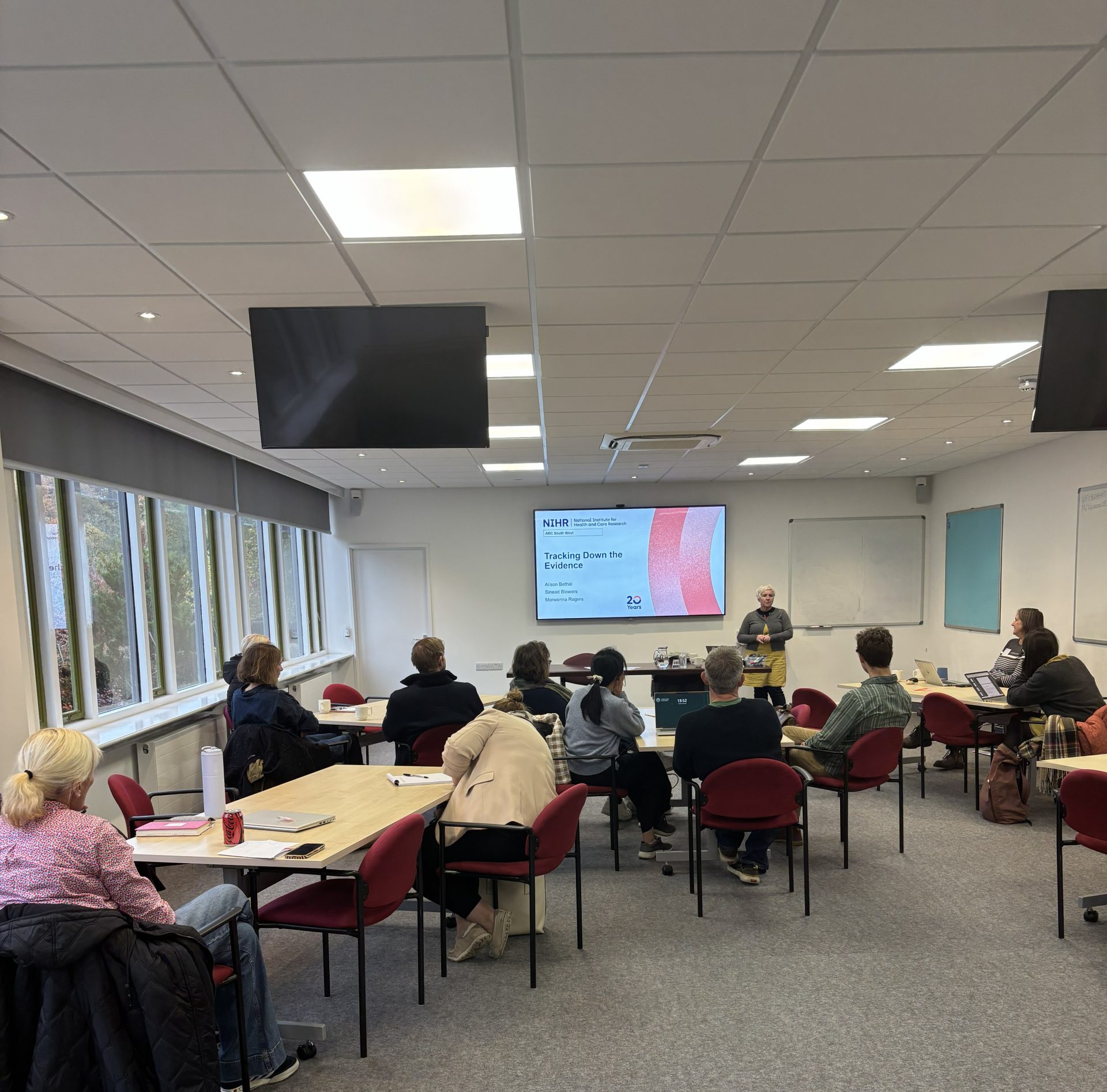
- Tracking down the evidence: Building confidence in developing effective search strategies, choosing appropriate databases and finding high-quality evidence efficiently.
- Introduction to qualitative research evidence: Exploring the principles of qualitative research and how to critically appraise studies to understand experiences and perspectives relevant to practice.
- Introduction to diagnostic studies: Understanding how diagnostic tests are evaluated and developing skills to critically appraise diagnostic research to inform clinical decisions.
Running across morning and afternoon sessions, the workshops allowed delegates to focus on different aspects of making sense of evidence, from finding relevant research to understanding its strengths, limitations and practical implications.
Together, the sessions highlighted that using research evidence effectively involves more than simply finding a published study. It requires the ability to ask the right questions, assess the quality of the evidence and consider how relevant it is to the people and settings in which it might be applied.
What happens next? Developing research knowledge and opportunities
The closing session looked beyond the conference itself, highlighting further opportunities available through ARC South West and its wider research and training networks.
Delegates heard about an opportunity currently in development aimed at health and care staff with little or no previous research experience. The proposed programme will help participants understand how research can enhance practice and support innovation, learn about the infrastructures and networks that support research, and explore opportunities to become more involved in research.
 The opportunity will particularly welcome applications from staff groups and settings that have traditionally had fewer opportunities to develop their research knowledge and skills. It is intended to complement existing development routes, including the Health and Care Professional Internship Programme, INSIGHTS, the NIHR Undergraduate Internship Programme and other research career development opportunities.
The session also highlighted the Health Service Modelling Associates (HSMA) Programme. This free, 15-month training and mentoring programme helps participants develop skills in computer modelling and data science, applying these to real-world challenges within their organisations. Open to people working in all healthcare roles, it does not require previous experience.
Alongside these wider opportunities, the Making Sense of Evidence programme continues to offer support for people wanting to build on their learning. This includes future one-day workshops, bespoke training sessions for organisations, resources for starting a journal club and opportunities to become involved as a programme tutor.
Continuing to make sense of evidence
The 2026 conference highlighted the continued importance of supporting people across health and care to understand, question and use research evidence.
Since 2010, the Making Sense of Evidence programme has delivered hundreds of workshops, supporting people from a wide range of professional backgrounds and levels of research experience to develop their confidence in finding, understanding and critically appraising evidence.
Alongside its annual conference, the programme has offered one-day workshops, bespoke training for organisations and resources to help people establish and develop journal clubs.
As ARC South West moves into its new funding period, there are opportunities to build on this work and continue developing support for people who want to engage with research and use evidence in their practice.
2026 Conference DelegateI have a much better understanding of systematic reviews now and also how research can be applied in clinical settings to improve the quality of patient care.
2026 Conference DelegateLots about setting up and analysing a systematic review. Lots of tips about tracking down the evidence and utilising tools to help this. Great to talk with other people about their research.
2026 Conference DelegateEngaging tutors in Systematic review and Tracking down the evidence made something that was previously daunting more accessible


Find out more about Making Sense of Evidence
To explore the existing workshops, training opportunities and resources, visit the Making Sense of Evidence webpage or contact arcsouthwest@exeter.ac.uk.
Find out more about HSMA
Find out more about the Health Service Modelling Associates programme and register your interest in HSMA Lambda.
Find out more about opportunities through ARC South West
Find out what opportunities are available to you and how ARC South West can support your research career


