
What does it mean to offer someone ‘proper help’ when they’re struggling with their mental health? And could we be overlooking the value of community support?
In this blog, Knowledge Mobilisation Fellow John Stammers reflects on a conversation with someone who felt they had reached the end of what local mental health services could offer. Drawing on his experiences of community mental health and lived experience, John challenges the idea that community support is somehow second best, and explores what a more connected approach to clinical and community support could look like.
This is the second in a series of thought pieces led by our Knowledge Mobilisation Fellows, exploring ideas and questions emerging from their work.
A man I’ve known for years came to see me recently.
He’d been struggling with his mental health and felt he’d reached the end of what local mental health services were offering him. He’d been pointed towards community support instead. He wasn’t impressed.
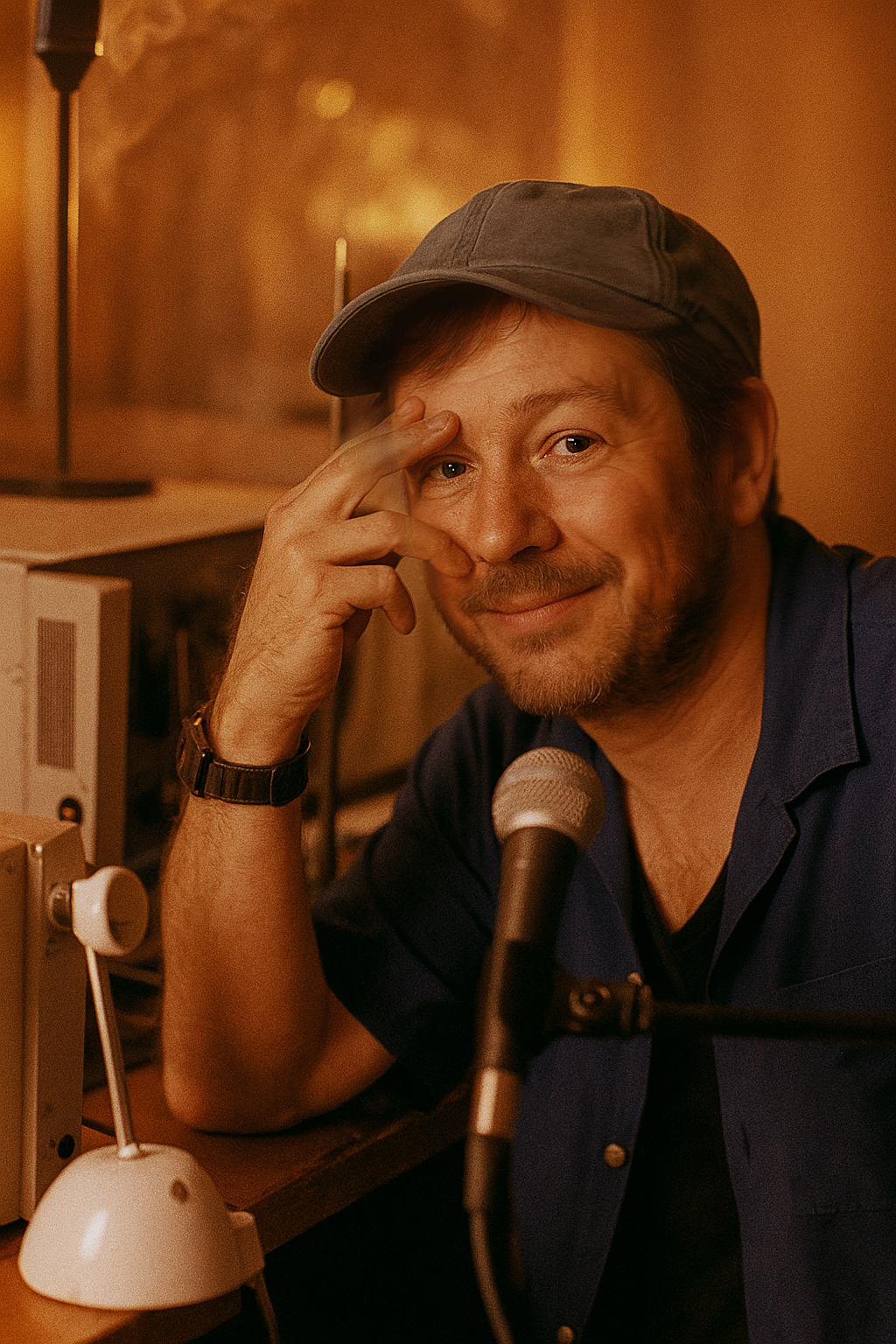
John Stammers
‘You guys are all very well. I know you charities try your best on limited resources. But it’s not the same as getting proper help. I feel like I’ve been thrown to the wolves.’
Thrown to the wolves. That was us, apparently.
But it was the other two words that really stuck with me. Proper help.
I’ve been thinking about those two words ever since. I think I know what he meant by that. There is an idea, probably quite deeply embedded in all of us, about where the real help sits. You struggle, you see your GP, you get referred. You wait.
And somewhere at the end of that waiting is the psychologist, the psychiatrist, a therapist, or a specialist service that will hopefully provide the magical remedy, the thing you actually need. And around all of this there may be community groups, charities, peer support, walking groups, cafés, creative activities, places to go and people to talk to.
All good stuff. But not proper help. I wonder if we’ve got that wrong…
What are we waiting for?
I’m not suggesting that clinical support doesn’t matter. Sometimes people need specialist mental health care. Sometimes they need medication, therapy, psychiatry, hospital care or other clinical interventions. Community organisations shouldn’t become a cheap substitute for any of those things simply because services are stretched.
But I’ve spent a lot of time around community mental health and lived experience, and I keep seeing something else. People find relationships, they find somewhere they can turn up next Tuesday, and the Tuesday after that.
Someone notices when they’re missing.
They meet somebody who has been somewhere vaguely similar to them, and doesn’t need everything explaining. They walk, make things, drink coffee, sit quietly, grow things. Sometimes they like to talk rubbish. Sometimes they talk about things that really matter. Sometimes they help somebody else.
And something shifts. It can sound rather soft when you put it next to clinical intervention, but what if some of this isn’t peripheral to mental health at all? What if it’s part of the infrastructure?
A smorgasbord
I had a conversation recently about what it might look like if, rather than offering one community mental health intervention, we could offer a whole smorgasbord of things. I like that word. Because not everybody wants an anxiety group. Not everybody wants to sit in a circle and talk about their mental health.
One person might want to walk. Someone else might want to make something. Someone might need peer support. Someone else might want somewhere safe and cosy to sit with a cup of tea and not have to explain themselves.
There might be music, nature, exercise, art, practical activity, conversation, groups led by people with lived experience, and probably a quirky range of things nobody has thought of yet. And crucially, people could move around that landscape rather than being prescribed one thing and deemed to have failed to engage if it wasn’t right for them.
That starts to feel less like a menu of services and more like an ecosystem.
What if it worked beautifully?
A friend of mine recently wrote something imagining exactly that. Her starting question was wonderfully simple:
What if the system worked beautifully, what would that feel like?
She imagined somebody going through an extreme change in their experience of reality, but instead of everything suddenly becoming about illness, services and professionals, there was a community around them that knew how to respond.
There were safe places. People with their own lived experience. Support for family and friends. Time. Creativity. Movement. Quiet. Conversation.
Clinical knowledge and medication hadn’t disappeared. They were part of it. That distinction feels increasingly important to me. Because perhaps the alternative to an overstretched clinical mental health system isn’t simply more community provision over here.
Perhaps it’s something much more joined-up. Clinical expertise naturally embedded within a wider community ecosystem. A psychologist who isn’t sitting at the distant end of a referral pathway but is connected with the people and places that are supporting somebody in their everyday life. Peer support that isn’t regarded as the nice extra.
Community organisations that aren’t simply handed people when statutory services have reached their limit. And people themselves having far more choice about what combination of support works for them.
Not clinical or community. Clinical in community.
Could we actually find out?
This is where my Knowledge Mobilisation Fellowship is making me increasingly troublesome. Because once you start hearing these ideas from different places, you start wondering what would happen if somebody actually tried it. What if we deliberately created that smorgasbord?
Not one group or one six-week intervention, but a connected range of community mental health opportunities, co-designed with the people who might use them. What if clinical expertise was part of it from the beginning?
And then, importantly, what if we researched it? Not simply: Did attending Group X reduce somebody’s score on Measure Y after twelve weeks? But what happened across the whole ecosystem?
Where did people go? What did they choose? What did they come back to? Where did relationships form? Did people become less isolated? Did confidence change? Did people need services differently? What mattered to them that we hadn’t thought to measure?
Perhaps we’d discover that some of it made very little difference, and that would be useful to know too. But perhaps we’d begin to understand something about mental health support that is difficult to see when we keep studying individual interventions in isolation.
Back to proper help
The man who started me thinking about all this had actually been referred to a face-to-face anxiety group at CoLab.
Unfortunately, we didn’t have one. Which is perhaps another blog entirely…
But his point remains. If somebody asks for help and is redirected towards ‘the community’ because the clinical option isn’t available, I can understand why that might feel like second best. That’s very different from being part of something where community and clinical support were designed together from the outset.
System change doesn’t need to be professionals versus lived experience, or statutory services versus community organisations. The interesting territory is the bit in between.
Maybe proper help isn’t waiting at the end of the referral pathway after all. Maybe we need to build it around people?
Read more from John
What does it really mean when we describe people as “hard to reach”? And who, in reality, is doing the reaching?
In this blog, Knowledge Mobilisation Fellow John Stammers reflects on his work alongside people affected by homelessness, addiction and mental health challenges.
Find out more